
.png&w=3840&q=75)
Key Capabilities
- 92% accuracy across diverse user groups
- Real-time gait pattern recognition
- Novel gait feature extraction algorithms
- Multi-algorithm classification pipeline
Project Links
What is Gait Auth?
Mobile devices hold increasingly sensitive personal data, yet most authentication mechanisms — PINs, passwords, fingerprints — require deliberate user action and remain vulnerable to theft or spoofing. Gait Auth addresses this gap by treating the way a person walks as a continuous, passive authentication signal. Every individual has a distinctive gait shaped by physiology and habit; Gait Auth captures that signature from a phone's built-in accelerometer and uses machine learning to verify identity without interrupting the user.
The system was developed as part of an AI & ML coursework project (Group 34), combining signal processing, feature engineering, and classification modelling to produce a working proof-of-concept for behavioural biometric authentication.
Key Features
Passive Background Authentication
Unlike fingerprint or face recognition, Gait Auth operates without any user-initiated trigger. Accelerometer data is collected continuously as the device is carried, and authentication decisions are produced in the background. This makes the system suitable as a continuous or step-up authentication layer in mobile security architectures.
Custom Feature Extraction Pipeline
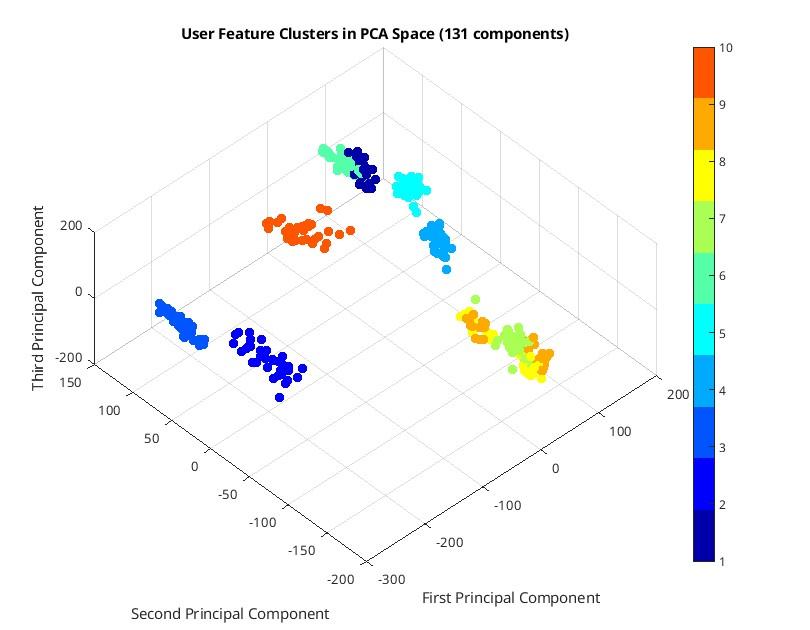
Raw three-axis accelerometer readings are inherently noisy and high-dimensional. The system applies a purpose-built feature extraction pipeline that condenses each gait window into a compact vector of time-domain statistics and frequency-domain components — capturing stride length, cadence, and acceleration variance in a form the classifiers can act on efficiently.
MLP and SVM Classification
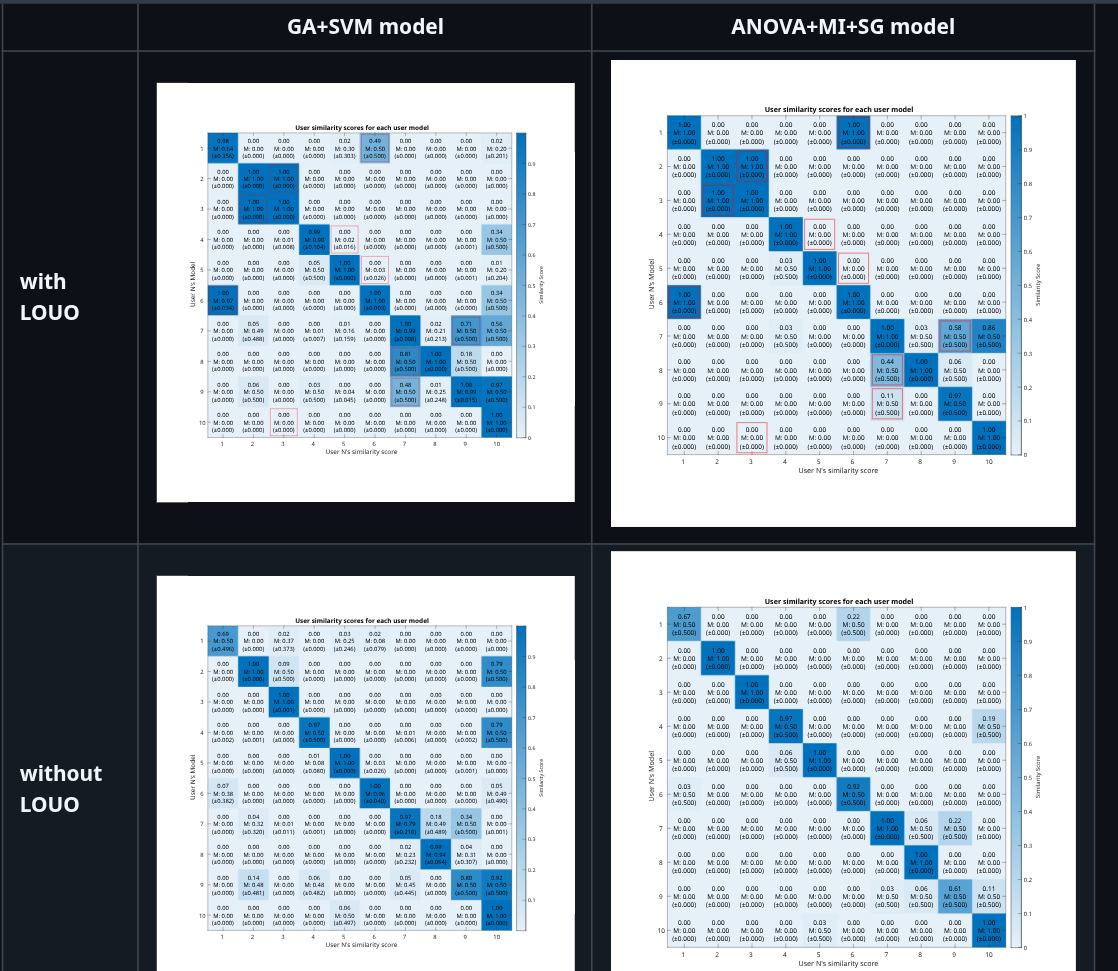
Two complementary classifiers are trained on the extracted features. The MLP learns non-linear decision boundaries across the feature space, while the SVM applies a kernel method well-suited to smaller, high-quality feature sets. Running both allows direct performance comparison and provides a basis for ensemble or fallback strategies.
Cross-Condition Robustness
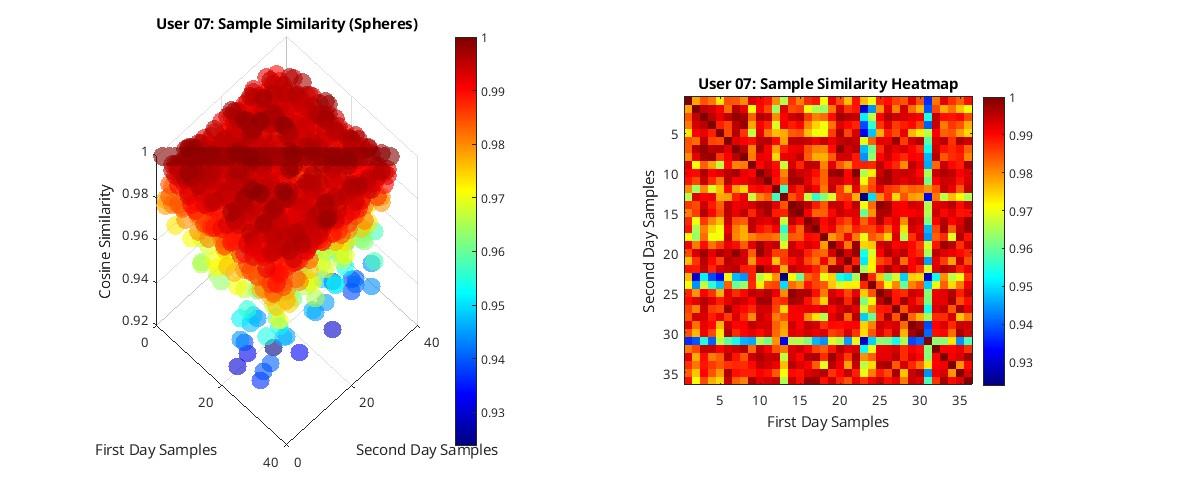
Gait naturally varies — carrying a bag, walking up stairs, or changing pace all affect accelerometer readings. The feature engineering and model training pipeline is designed to be robust to these intra-user variations while still discriminating clearly between different individuals.
Technical Approach
The processing flow moves through four stages:
- Data Collection — Triaxial accelerometer readings are captured from mobile sensors at a fixed sampling rate and segmented into overlapping time windows.
- Preprocessing — Windows are denoised and normalised to account for device orientation and sensor drift.
- Feature Extraction — Each window is reduced to a feature vector encoding statistical and frequency-domain descriptors of the gait cycle.
- Classification — MLP and SVM models independently produce an identity prediction per window; predictions over a walking episode are aggregated into a final authentication decision.
The entire pipeline is implemented in MATLAB, making use of its Signal Processing Toolbox for filtering and spectral analysis and its Statistics and Machine Learning Toolbox for model training and evaluation.
Biometric Data Privacy
Rather than logging raw sensor streams, the system stores only the derived feature profiles per enrolled user. This design choice limits the personal data footprint and reduces re-identification risk if the profile store were compromised.
Challenges
Extracting clean signal from consumer accelerometers is non-trivial — device placement, walking surface, and carrying posture all introduce noise that can obscure individual gait signatures. The feature engineering work focused on identifying descriptors that remain stable across these conditions while retaining discriminative power between users. Balancing model accuracy against computational cost was also a constraint, given the target of real-time operation on mobile hardware.
Impact
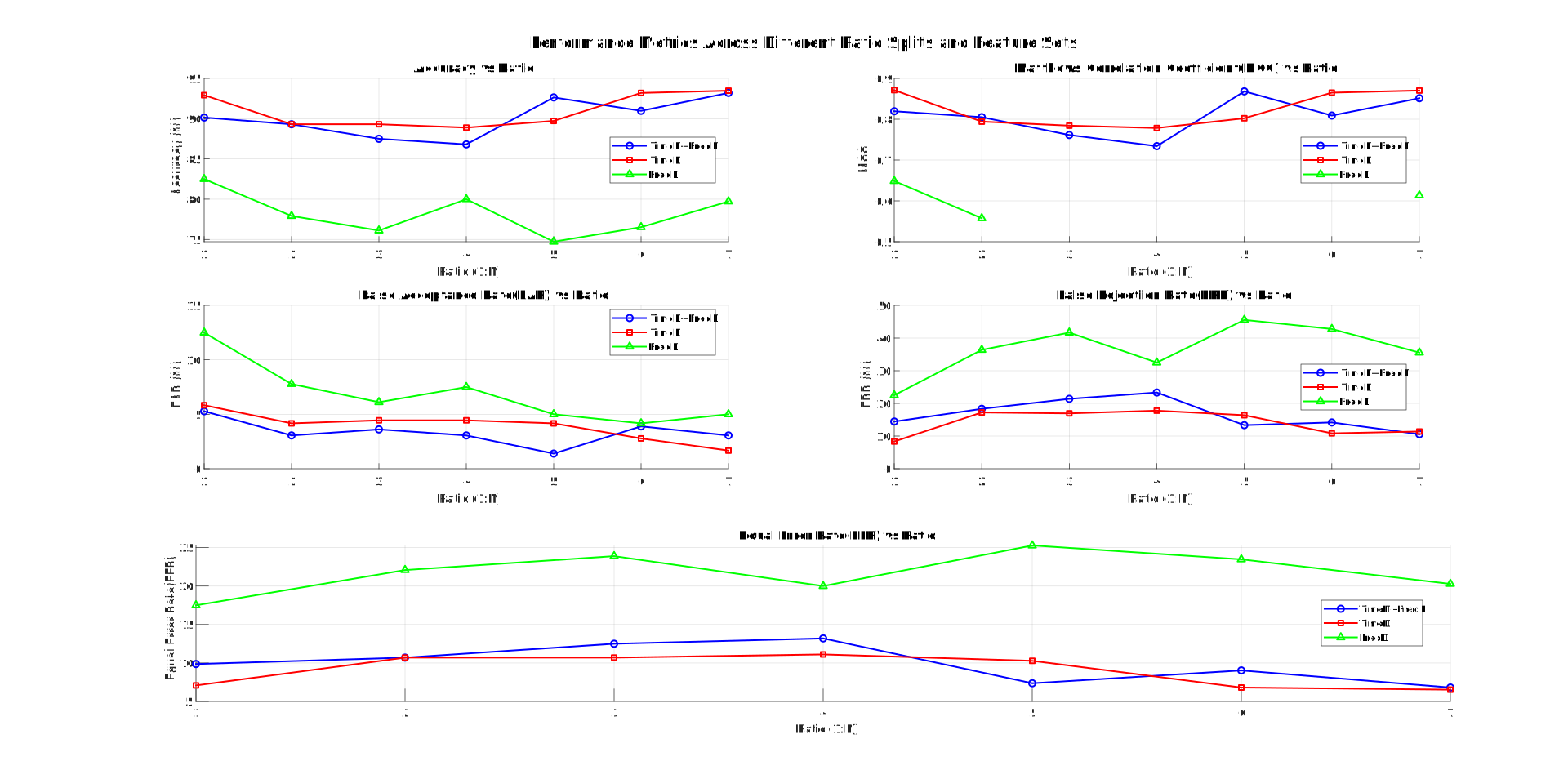
Gait Auth achieved 92% authentication accuracy across a diverse set of participants, validating the core hypothesis that accelerometer-derived gait features carry sufficient identity information for reliable biometric authentication. The project demonstrates how commodity mobile sensors, combined with classical signal processing and modern ML classifiers, can support unobtrusive security — an approach with clear applications in continuous authentication, anomaly detection, and multi-factor security systems.